
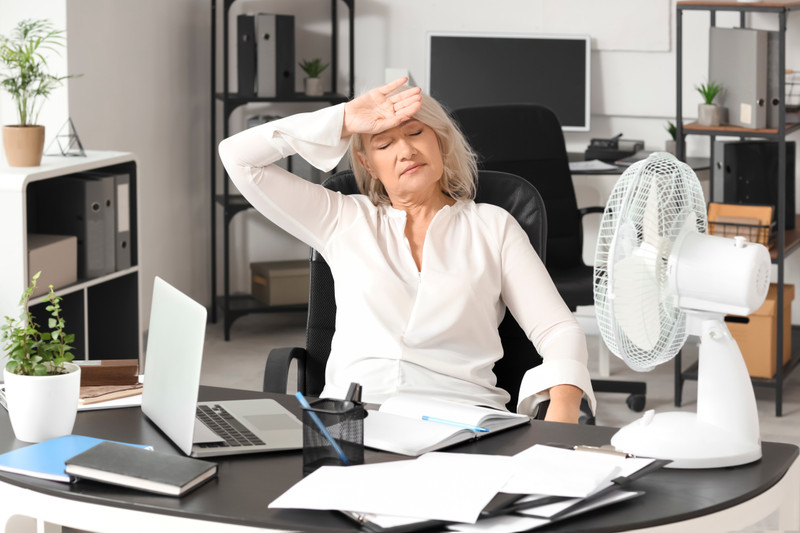
Any mention of “night sweats’ that comes up in chats among co-workers around the proverbial water cooler usually turns to comparable references known as “hot flashes,” most commonly associated with menopausal women. Although night sweats and hot flashes have some similar symptoms, such as bountiful heat-induced perspiration, to include around the facial area, the former is most often associated with anxiety and the latter with hormonal changes.
Nonetheless, we will cover both in this blog.
One truth, though, is that almost anyone – young or older, male or female, Republican or Democrat – is susceptible to night sweats/hot flashes at one time or another. In both cases, the respective experiences can be as troublesome and unexpected as they are uncomfortable. In some cases, that is putting it mildly.
What Are Night Sweats?
Night sweats are a series of episodes in which the individual sweats profusely while asleep, waking up to find himself or herself in soaked nightclothes and/or bedding. These are not to be confused with nighttime sweating that clearly is the result of elevated room temperature or being covered by more bedding than needed (such as blankets or even a comforter).
Night sweats typically are accompanied by symptoms of concern such as fever, specific pain, a cough, or diarrhea. Possible root causes are numerous, ranging from the use of medications such as antidepressants, hormone therapy, or hypoglycemic agents (for low sugar) to conditions such as anxiety disorders, autoimmune disorders, an overactive thyroid (hyperthyroidism), or a sleep disorder such as obstructive sleep apnea.
Explain Hot Flashes in Menopausal Women
First, menopausal hot flashes usually don’t involve waking up in bed to discover you’ve just been dipped in a vat of flop sweat. Yet it can be just as frighting as night sweats and typically occur repeatedly at unpredictable intervals. Hot flashes usually are reported as sensations of intense heat felt in the areas of the face, neck, and chest, accompanied by heavy sweating, flushing, and chills. A woman in the middle of a hot flash episode can conceivably step outside into sub-zero temperatures and still be inclined to start removing articles of clothing to cool down – and even that might not be enough.
So what’s going on here besides being defined simply as “just a typical symptom” of menopause? In short, hot flashes have been defined as a “rapid and exaggerated heat dissipation response” triggered by slight (where even “slight” is significant) elevations of core body temperature, in part brought on by the depletion of estrogen during menopause. It should also be noted, though, that hot flashes can indeed occur during sleep, leading to sleep disruptions.
5 Natural Remedies for Night Sweats/Hot Flashes.
Some or perhaps even all of the following five natural remedies might have some use for both night sweats and hot flashes, or either/or. It would behoove you to discuss the use of any of these supplements with your personal physician or other properly licensed healthcare professional before using them. In no particular order:
Black cohosh. This perennial woodland herb, a member of the buttercup family and native to North America, is often among the first supplements mentioned when the subject is hot flashes and/or night sweats. Its preparations as a supplement utilize the plant’s roots and underground stems (rhizomes).
Red clover. This plant is an abundant source of isoflavones, which are compounds that operate very similarly to estrogen, a deficiency of which can be a factor behind the occurrence of hot flashes in menopausal women.
Dong quai. Multiple studies have shown that dong quai in conjunction with other herbs such as red clover and black cohosh have been effective in alleviating both hot flashes and night sweats. In so doing, it can also improve sleep.
Vitamins B6 & B12. These two vitamins from the B family have occasionally been shown able to help counter anxiety issues related to night sweating.
If night sweats or hot flashes have been disrupting your sleep, even for the short term, you should arrange a meeting with your personal physician or other healthcare professional to discuss the above-mentioned supplements to see if any of them can help you and are suitable for you, especially if you are already taking prescription medicines.