
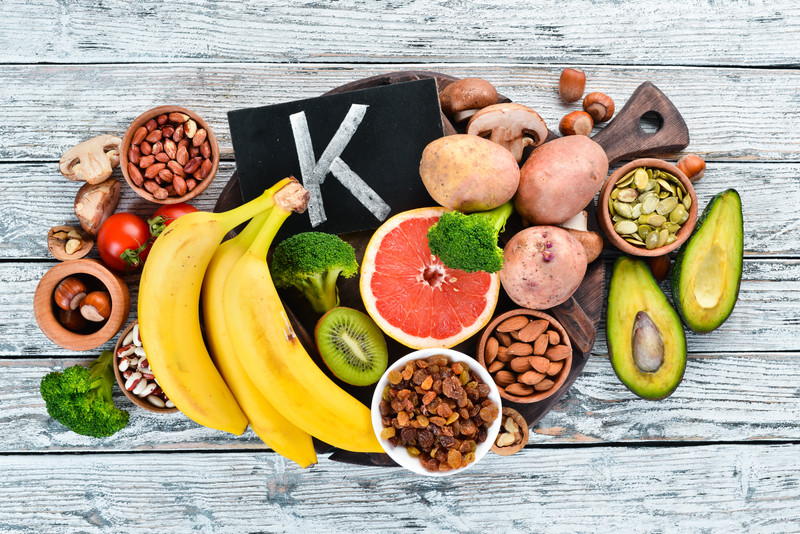
Potassium is one of those handful of healthful minerals classified as a major essential mineral, making it one of the fewer than ten elements that comprise this elite grouping. Like the other minerals in this category, a sufficient amount of potassium is indispensable to our healthy well-being and functionality as humans. Strangely, though, our bodies do not manufacture potassium but are entirely dependent on us to ingest a sufficient quantity to keep our engines running properly.
It is widely conjectured among health experts that at least half of all Americans don’t get enough potassium in their daily diets. This has been known for quite a while; in fact, the Dietary Guidelines of Americans 2010 Advisory Committee identified potassium officially as a shortfall nutrient, one of four nutrients so designated. Why is it important to know this? Because dietary potassium is crucial for maintaining proper health of your heart and bones, and it also lessens the risk of stroke and coronary heart disease.
Of course, it is difficult to measure out exactly how much of every bodily-needful vitamin, compound, or nutrient our diets are providing us, although testing from healthcare professionals is available. We always have the option of augmenting our intake of nutrients – potassium included – via supplementation with over-the-counter natural remedies.
What Exactly is Potassium and How Does It Work?
Potassium is not only a major essential mineral but also one that is an electrolyte, meaning that it carries an electric charge (although don’t be concerned about getting a shock if you eat a potassium-rich banana or start using potassium supplements). Potassium’s electric charge equips it for a variety of functions such as balancing the amount of fluids in your body, assisting in the contraction of muscles, and protecting bone health by cutting back on the amount of bone-friendly calcium lost during urination.
In general, potassium is needed to help control the normal functioning of all your cells. By so doing, it regulates your heartbeat, contributes to proper function of muscles and bones, and has a lead part in synthesizing protein and metabolizing carbohydrates.
Any deep discussion of potassium and its value and how it works often brings up mention of another essential mineral – sodium, as they share various characteristics (both are electrolytes, for one). However, the ratio of one mineral compared to the other has gotten out of whack in recent years, leading to a preponderance of hypertension (high blood pressure) among a significant portion of the American population. In short, consuming too much sodium and too little potassium will likely raise your blood pressure.
While high blood pressure is known as the “silent killer” (not usually accompanied by tangible symptoms you can feel in your body), a potassium deficiency can be manifested in symptoms such as arrhythmia, constipation, fatigue and weakness, and cramping of muscles.
Many centuries ago, in what we now know as the Paleolithic diet, potassium was readily abundant while sodium was scarce. In those long-ago days, the Paleo diet provided about 16 times the amount of potassium than it did sodium (salt). Present day, and this is astounding, the average American diet includes about double the amount of sodium as it does potassium, a major reversal often attributed to the excessive amount of salt hidden in processed foods which simultaneously are sorely lacking in potassium. Food for thought when you realize now that one in three adults are afflicted with hypertension.
Today’s lesson? Keep potassium, either via food sources or natural remedies, handy in your pantry or kitchen cabinets. Note, too, there are foods (most notably fruits and vegetables, in general) other than bananas that can provide a healthy dose of potassium. Supplements are readily available, too. As with any other natural remedy, be sure to discuss factors related to your possible use of supplements (such as not mixing with certain prescription medications) with your physician or other healthcare professional before trying them out.