
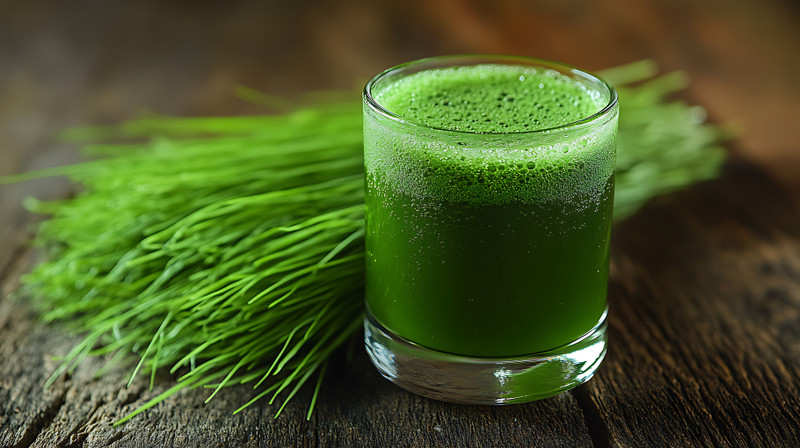
After a brief hiatus to catch up on other blog topics, we now return to our ongoing Healthy Living series in which we offer simultaneous summations of a natural remedy and health condition, each beginning with the same letter. This time the dial stops at W as we take a look at wheatgrass and the relatively rare affliction known as Wilson’s disease.
Natural Remedy: Wheatgrass
If the name “wheatgrass” sounds like it describes an herb that is two components in one, that is because it is. Wheatgrass is indeed a type of wheat, derived from the plant species Triticum aestivum. In its earliest stages of growth it bears a resemblance to the kind of common grass you might find in your backyard or at a local park.
Wheatgrass is known for its abundance of chlorophyll, which gives plants its green hue. Chlorophyll is also an active compound able to increase oxygen levels in your body. Furthermore, wheatgrass also contains enzymes, amino acids, vitamins and minerals, as well as flavonoids, alkaloids, and tannins. It’s no wonder this herb is a popular antioxidant and anti-inflammatory; some experts even antimicrobial and antibacterial to the list of this wonder herb’s many attributes.
One of wheatgrass’s assets is its knack for bolstering the immune system. The above-mentioned phytochemicals function as antioxidants by warding off the damage to cells caused by natural cell processes and lifestyle-inflicted damage related to smoking or bad dietary practices. Following is a rundown of other noteworthy wheatgrass health benefits:
- As an antioxidant, wheatgrass can help fight chronic inflammation typically associated with autoimmune diseases such as rheumatoid arthritis and type 1 diabetes.
- It is able to thwart infections. Research conducted in the last 10 years indicated that wheatgrass could kill or at least stall the growth of certain infections, making it potentially useful in treating stubborn, antibiotic-resistant infections. Its antimicrobial properties have had success preventing certain types of streptococcal (strep) infections and some forms of Lactobacillus bacteria involved in many infections such as those that are dental-related.
- Reduce unhealthy cholesterol levels. This has been borne out in animal studies.
- Stabilizes red blood cells. This was shown in a study in which participants – children and young adults – dependent on frequent blood transfusions to treat a genetic disease that destroyed red blood cells, needed fewer transfusions after drinking wheatgrass juice daily.
- Lowers blood-sugar levels. Studies have shown wheatgrass could be helpful for treating Type 2 diabetes.
Health Condition: Wilson’s Disease
This is a rare genetic affliction (handed down from one generation to the next) in which copper levels in the body have built up in several organs, such as the liver and brain. It can be life-threatening if not treated.
Copper at healthy levels is not a bad thing; in fact, it is classified as one of nine essential trace minerals as it plays an important role in building healthy nerves, bones, collagen, and melanin (our skin’s pigment).
About one in 30,000 people, mostly between the ages of 5 and 35, are born with Wilson’s disease. However, both parents must be carrying the gene for the child to be afflicted.
It surfaces when your body starts failing to efficiently excrete copper. Symptoms can include loss of appetite, tiredness, jaundice (yellowing of the skin and whites of the eyes), excess fluid accumulation in the legs or stomach region, and mood or personality changes.
3 Natural Remedies for Wilson’s Disease
Prescription medications are typically used for treating Wilson’s disease patients, but a number of supplements or herbs have been identified as effective for alleviating health issues related to the disease. They include the following:
Vitamin B6. It can bolster the nervous system, thus helping to mitigate Wilson’s disease symptoms.
Potassium. This is a supplement best taken before eating so it can be available within your body to do its work in minimizing your body’s absorption of dietary copper when it is consumed as components inside certain foods.
Zinc. The ingestion of zinc, another essential trace mineral, helps initiate production of a protein, metallothionein, which then binds to copper, keeping it from entering the bloodstream. When the intestinal cells are then naturally shed, the metallothionein-bonded copper is expelled from the body.