
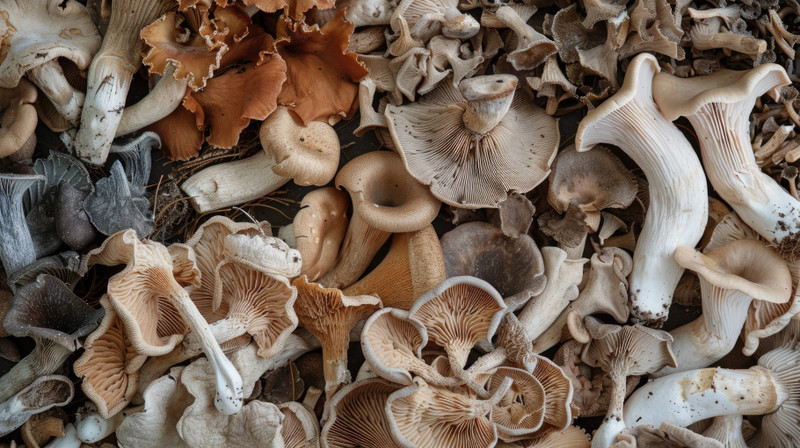
As we dive into Part III of our Marvelous Mushrooms series, we once again feature a product – a fungus – that is as good to consume as a garnishment that fits dozens of choices of cuisine as it is a natural remedy for an assortment of human ailments and other health needs. This time we zero in on maitake mushrooms, one of a number of medicinal mushrooms that for thousands of years have been used by medical practitioners to promote health.
Also known colloquially as hen of the woods, or Grifola frondosa (as well as sheep’s head and ram’s head) – or maitake (“dancing mushroom”) in Japanese – the maitake mushroom truly is a big deal. Native to China and Japan, as well as Europe and North America, maitake is what is known as a polypore mushroom. It grows at the base of trees, mostly oaks and maples, sometimes to a size larger than 100 pounds! No wonder it has been bestowed with the honor of being “king of the mushrooms.”
Maitake’s Popularity at the Table and for Treatment
Although mushrooms are classified as fungi – fungus singular – Americans don’t seem to shy away from eating these pleasantly edible plants that provide a rich, savory taste. In fact, official estimates from the U.S. Department of Agriculture are that the average American eats three pounds of mushrooms a year which is a good thing because these fungi – there’s that word again – which are lean when it comes to fat, low when it comes to sodium (important to diners with hypertension), and light on calories.
Yet for medicinal purposes they can help thwart chronic diseases and enhance your everyday health. Maitake’s abundance of protein, fiber, niacin (vitamin B3) and bioactive compounds such as beta-glucans that bolster numerous body systems. all are instrumental as positive health ingredients. Niacin is known for supporting the metabolism of energy while nutritional ingredients such as work in tandem to assist in supporting everything from acceptable nerve function to cardiovascular health.
But let’s not dance around the “dancing mushroom’s” health benefits anymore. Let’ dive into some specifics.
6 of Maitake’s Most Notable Health Benefits
In no particular order:
Regulates blood-sugar levels: Studies with animals – rats in one, mice in the other – found that administering maitake mushrooms to diabetic animals produced anti-diabetic results, including enhanced glucose tolerance and improved blood-glucose levels.
Aids gut health: Maitake’s prebiotic fibers enhance the presence of healthy bacteria in your gut, which can also help you with weight management.
Protects healthy fertility: Research has demonstrated that maitake mushrooms can be a corrective remedy against polycystic ovarian syndrome (PCOS) in women, a condition in which an excess production of male hormones by the ovaries can lead to, among other things, cysts on the ovaries and infertility.
Benefits cognitive function: Maitake’s neuroprotective characteristics puts this fungus on the list of natural remedies that have the potential to protect your brain. A study involving more than 600 test subjects over the age of 60 found that those fed one to two servings of mushrooms weekly – including maitake – showed a 43 percent lower risk of mild cognitive impairment.
Provides vitamin D: Vitamin D is instrumental to our overall health in assorted areas of our body, although it can be hard to acquire a sufficient amount unless you spend a lot of time in the sun. It is, after all, the “sunshine vitamin.” There are few food sources for D, but one of them happens to be mushrooms, including maitake. Keep some handy – supplementation makes that easy.
Enhances immunity: The polysaccharide beta-glucan that is a constituent of maitake has been shown to assist proper immune function. Maitake performs as a natural defense system by fending off foreign invaders, guarding your body against infections among other unwelcome assailants with bad intentions.
Maitake is just one of a variety of safe, edible mushrooms that double as mealtime delights and natural-remedy health boosters, each in their own way providing an assortment of benefits. As always, though, before trying out maitake or any other mushroom supplements yourself, be sure to talk over the pros and cons relative to your own particular health profile to include consideration of any prescription medications you might be taking.