
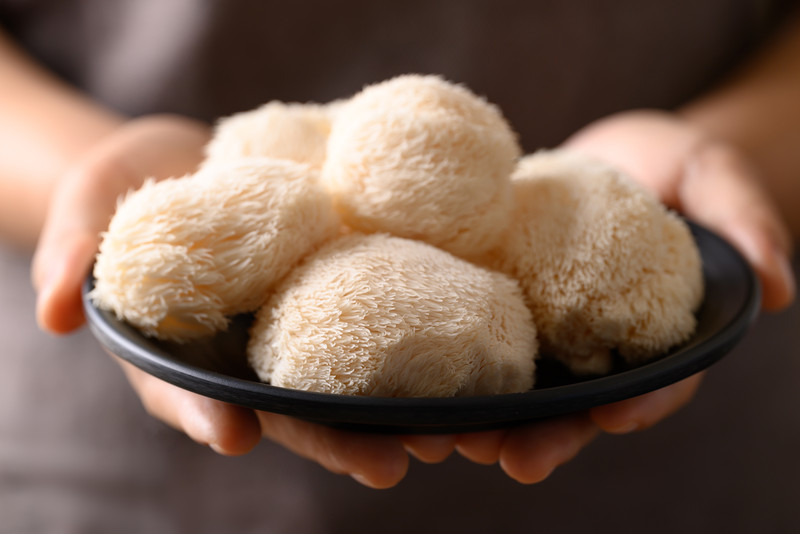
In recent months we have jumped around in our ongoing series of “Marvelous Mushrooms.” We have celebrated them for the prominent place they have earned on dinner tables as well in the pantheon of valued herbs suitable for treating ailments and other health-related conditions begging remedial attention. This time, we introduce you to (or possibly reacquaint you with) lion’s mane, a type of fleshy, spore-bearing body of a fungus that is scientifically known as Hericium erinaceus.
Like shiitake, maitake, and cordyceps mushrooms previously featured here, lion’s mane serves culinary, medicinal, and, in some cases, ecological uses. Note, too, that the name lion’s mane comes from the mushroom’s physical attributes, most conspicuously its big, white shape resembling a lion’s mane. They have even been described as white poms-poms, although they presumably have never been spotted in the hands of cheerleaders cheering at football games. Their taste has been compared to seafood.
What Gives Lion’s Mane Its Healing Attributes?
For one thing, this type of mushroom – actually there are three varieties, and it is native to North America, Europe, and Asia – has an abundance of anti-inflammatory constituents. That helps explain its perceived ability to alleviate mild symptoms of depression and anxiety. It can perhaps even thwart the onset or development of dementia by activating brain cell growth and stopping neuronal harm.
A second factor behind lion’s mane medicinal properties is its antioxidant abilities. They are potent enough that this mushroom was ranked fourth in antioxidant activity among 14 mushroom species examined in a 2012 study. Lion’s mane medicinal powers are driven mostly by its unique bioactive constituents hericenones and erinacines that between them help catalyze nerve growth factor (NGF) and brain-derived neurotropic factor (BDNF), which are terpenoids that contribute to cognitive health and function (think memory and focus).
6 of Lion Mane’s Other Impressive Health Benefits
We’ve already touched on the broad strokes of some of these health-inducing attributes. However, let’s dive into this a bit with a more comprehensive look at lion’s mane’s adaptive attributes to boost our health in various ways. Let’s start with the six listed below:
Fight Free Radicals: Credit that to lion’s mane’s antioxidant nature. Free radicals are unstable molecules roaming through our bodies, attacking key systems within and rendering us vulnerable to chronic conditions such as heart disease and arthritis. Lion’s mane can tame these pesky intruders limiting the damage they can cause.
Boost Energy: By its very nature, lion’s mane can boost your energy, whether you are an athlete or not, giving you that extra sustained push to help get you through an otherwise unnecessarily tiring, drag-you-down day.
Support Heart Health: Lion’s mane is equipped to improve your lipid metabolism and circulation, both of which can help keep your blood vessels in optimal health and function more efficiently.
Mitigate Diabetes Symptoms: Diabetes is a chronic disease that involves impairment of your body’s capacity to properly maintain healthy blood-sugar levels. Lion’s mane can address that issue in part by bolstering blood-sugar management while diminishing side effects. One way it accomplishes this is by lowering elevated blood sugar, pulling this off by obstructing activity of alpha-glucosidase, an enzyme.
Bolster Immunity: Lion’s mane can help with this by stimulating activity of the intestinal immune system, resulting in enhanced protection of your body from intruding pathogens. Additionally, its polysaccharides can stimulate the immune system by aiding in the manufacture of white blood cells.
Protect Gut Health: In addition to what other of its components have been mentioned here, lion’s mane mushroom also contain probiotics, which can augment the activity of your immune system and stimulate the growth of your digestive system’s healthy bacteria.
Count lion’s mane among other mushrooms that have been featured here for their double-dipping assets going from mealtime to health-care time. As with any other herb or supplement used as a natural remedy, be sure to discuss lion’s mane’s use with your personal physician or other healthcare provider to make sure its use is suitable for you and your particular health needs not in conflict with any prescriptions you might be on.